How Carbon Fiber Layup Affects Frame Stiffness and Weight
Understanding how carbon fiber layup affects frame stiffness and weight is central to evaluating modern bicycle performance. Carbon fiber composite frames are not monolithic; they are engineered structures where the orientation and placement of individual plies, along with the amount of resin, determine the final mechanical properties. This article examines the relationship between layup schedules and key characteristics such as stiffness-to-weight ratio and ride quality, providing a technical overview for enthusiasts and professionals.
The discussion focuses on the fundamental principles of composite design, including fiber orientation, ply stacking sequences, and resin content. It highlights how variations in these parameters can lead to different performance outcomes, without prescribing specific designs or guaranteeing results. The aim is to offer a neutral, informative perspective on the engineering trade-offs involved in carbon fiber frame construction.
Note: All performance characteristics depend on multiple factors, including rider input, riding conditions, and manufacturing tolerances. The information presented is for educational purposes only.
Fundamentals of Carbon Fiber Layup
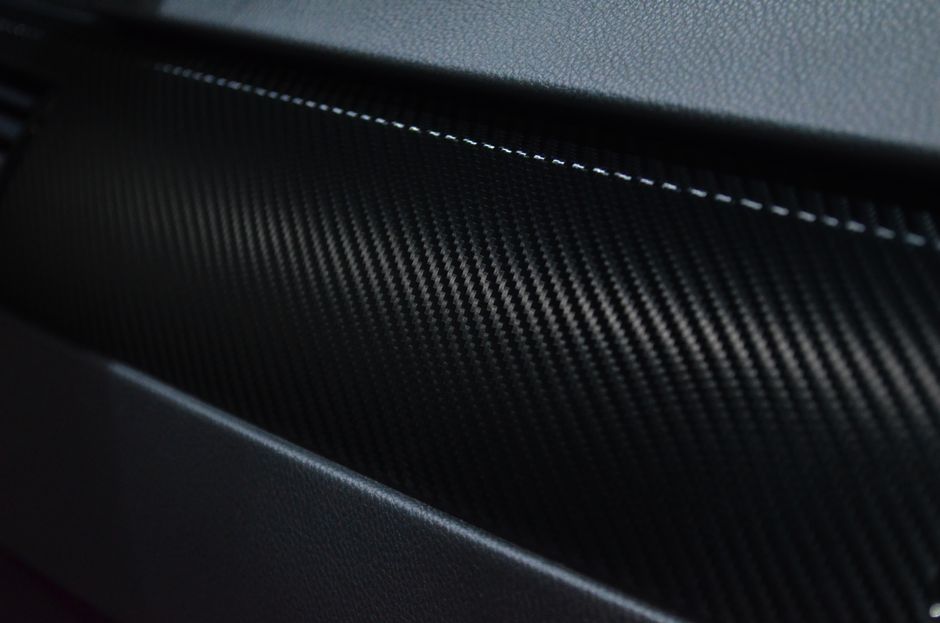
Carbon fiber layup refers to the process of arranging pre-impregnated carbon fiber sheets, known as plies, in a specific sequence and orientation within a mold. Each ply consists of thousands of carbon filaments embedded in a resin matrix, typically epoxy. The orientation of these fibers—measured in degrees relative to a reference axis—dictates the directional stiffness and strength of the resulting composite. Common orientations include 0 degrees (aligned with the frame’s length), 45 degrees, and 90 degrees, each contributing distinct mechanical properties.
The stacking sequence, or layup schedule, determines how loads are distributed throughout the frame. For example, plies oriented at 0 degrees primarily resist bending and axial loads, while 45-degree plies enhance torsional rigidity. 90-degree plies provide hoop strength and impact resistance. By combining plies in various angles, engineers can tailor the frame’s response to specific load cases, such as pedalling forces or cornering stresses. The number of plies, their thickness, and the order in which they are stacked further influence the overall stiffness and weight.
Resin content, typically expressed as a weight percentage, is another critical variable. Higher resin content can improve toughness and fatigue resistance but adds weight and may reduce stiffness, as resin is less stiff than carbon fiber. Conversely, lower resin content increases stiffness and reduces weight but can make the composite more brittle. Achieving an optimal balance requires precise control during manufacturing, often through processes like autoclave curing or resin transfer molding.
In practice, layup design is a compromise between competing objectives: maximizing stiffness, minimizing weight, and ensuring durability. Veloframe Engineering, for instance, employs computational modelling and physical testing to iterate layup schedules, but the final characteristics also depend on the specific carbon fiber grade and manufacturing method. The following sections explore how these factors interact to affect stiffness-to-weight ratios and ride quality.
Fiber Orientation and Its Impact on Stiffness
Fiber orientation is the primary lever for tuning stiffness in carbon fiber frames. Because carbon fibers exhibit high stiffness along their axis but low stiffness perpendicular to it, the angle at which plies are placed directly controls the frame’s resistance to different types of deformation. For instance, a frame with a high proportion of 0-degree plies will be very stiff in bending, which can enhance power transfer during pedalling. However, such a frame may feel harsh and may lack compliance in other directions.
Torsional stiffness, which affects handling precision and cornering stability, is largely governed by plies oriented at plus or minus 45 degrees. These angled plies create a shear-resistant structure that resists twisting. A layup with a balanced mix of 0-degree and 45-degree plies can provide a blend of bending and torsional stiffness, but the exact ratio depends on the frame’s geometry and intended use. For example, a road racing frame might prioritise torsional stiffness, while a gravel frame might incorporate more angled plies for compliance.
It is important to note that stiffness is not uniform across the frame. Different regions—such as the head tube, bottom bracket, and seat stays—experience distinct load patterns. Therefore, layup schedules are often localised, with specific zones receiving tailored ply orientations. This approach, known as selective reinforcement, allows engineers to optimise stiffness where it is needed most while saving weight elsewhere. However, such customisation increases complexity and may affect manufacturing consistency.
Veloframe Engineering’s design philosophy involves mapping load paths and assigning ply orientations accordingly. Yet, the resulting stiffness is also influenced by the resin system, curing cycle, and fibre volume fraction. Thus, while fiber orientation is a powerful tool, it is not the sole determinant of frame stiffness.
Resin Content and Weight Considerations
Resin content plays a dual role in carbon fiber composites: it binds the fibers together and transfers loads between them, but it also adds weight without contributing significantly to stiffness. Typical resin content by weight ranges from 30% to 40% for high-performance bicycle frames. Reducing resin content can lower weight and increase stiffness, as the proportion of stiff carbon fibers increases. However, too little resin can lead to poor fibre wet-out, voids, and reduced interlaminar strength, compromising durability.
Manufacturers use various techniques to control resin content, such as using pre-impregnated tapes with precise resin ratios or employing vacuum bagging and autoclave curing to remove excess resin. The choice of manufacturing process affects the achievable resin content and, consequently, the frame’s weight and mechanical properties. For instance, autoclave curing typically yields lower void content and more consistent resin distribution compared to out-of-autoclave methods, but it is more expensive and time-consuming.
Weight savings from reduced resin content can be significant, but they must be balanced against potential reductions in impact resistance and fatigue life. A frame that is too brittle may fail catastrophically under unexpected loads. Therefore, resin content is often optimised in conjunction with fiber orientation to achieve a target stiffness-to-weight ratio without sacrificing safety margins. Veloframe Engineering, for example, conducts extensive fatigue testing to validate resin content choices, but real-world performance also depends on rider weight, terrain, and maintenance practices.
Furthermore, the resin’s chemical composition influences its mechanical properties. Toughened epoxies may offer better impact resistance at the cost of slightly higher weight or lower stiffness. The selection of resin is thus another variable in the layup design space, and its effects are intertwined with fiber orientation and content.
Layup Schedules and Stiffness-to-Weight Ratio
The stiffness-to-weight ratio is a key metric for evaluating frame performance, as it quantifies how much stiffness is achieved per unit of mass. Layup schedules directly influence this ratio by determining the amount and orientation of carbon fibers and the resin content. A schedule that maximises the use of high-stiffness fibers in optimal orientations can yield a high ratio, but it may also result in a frame that is too stiff for certain riders or conditions.
Engineers often use a ply stacking sequence that balances stiffness in multiple directions. For example, a common approach is to alternate plies at 0, 45, -45, and 90 degrees to create a quasi-isotropic laminate. While this provides uniform stiffness, it may not be the most weight-efficient for specific load cases. Anisotropic layups, which are tailored to the dominant loads, can achieve higher stiffness-to-weight ratios but require precise analysis and testing.
The relationship between layup and stiffness-to-weight is not linear. Adding plies increases both stiffness and weight, but the rate of increase depends on the orientation and location of the added plies. Similarly, reducing resin content can improve the ratio up to a point, beyond which mechanical properties degrade. Therefore, optimisation is a multidimensional problem that often involves trade-offs between competing objectives.
Veloframe Engineering employs finite element analysis and optimisation algorithms to explore the design space, but the final layup schedule is also influenced by manufacturing constraints and cost. It is important to recognise that a higher stiffness-to-weight ratio does not automatically translate to better ride quality; other factors such as damping and compliance also play a role.
Implications for Ride Quality
Ride quality is a subjective yet important aspect of bicycle performance, encompassing comfort, vibration damping, and handling feel. Carbon fiber layup affects ride quality by influencing the frame’s stiffness, damping characteristics, and compliance. A frame with high stiffness in all directions may transmit more road vibrations to the rider, leading to a harsh ride. Conversely, a frame with carefully tuned compliance can absorb vibrations and provide a smoother experience.
Fiber orientation can be used to introduce compliance in specific directions. For example, plies oriented at 90 degrees can allow for slight flex in the vertical plane, which may improve comfort without significantly compromising pedalling efficiency. Similarly, the use of high-toughness resins can enhance vibration damping. However, these adjustments may add weight or reduce stiffness, highlighting the trade-offs involved.
Resin content also affects ride quality. A higher resin content can increase damping but adds weight, while a lower resin content may produce a livelier but harsher feel. The interplay between these factors means that ride quality is highly dependent on the overall layup schedule and cannot be attributed to a single variable. Moreover, rider perception of ride quality is influenced by factors such as tyre selection, saddle, and riding position, which may overshadow frame characteristics.
Veloframe Engineering’s approach involves iterative prototyping and rider feedback to fine-tune layup schedules for desired ride quality. However, individual preferences vary, and what feels comfortable to one rider may not suit another. Therefore, there is no universal layup that guarantees optimal ride quality for all.
Conclusion
Carbon fiber layup is a complex engineering discipline that profoundly affects frame stiffness, weight, and ride quality. Fiber orientation and resin content are primary variables that determine the mechanical properties of the composite, and their optimisation requires a balanced approach that considers multiple performance objectives. While higher stiffness-to-weight ratios are often desirable, they must be achieved without compromising durability or ride comfort.
Frames from companies like Veloframe Engineering exemplify how careful layup design can tailor performance characteristics, but the outcomes depend on a multitude of factors, including manufacturing quality, component selection, and rider usage. As with any engineering system, there are no guarantees; the best design is one that aligns with the intended use and rider expectations. This article provides a foundation for understanding these relationships, but further research and testing are essential for informed decision-making.