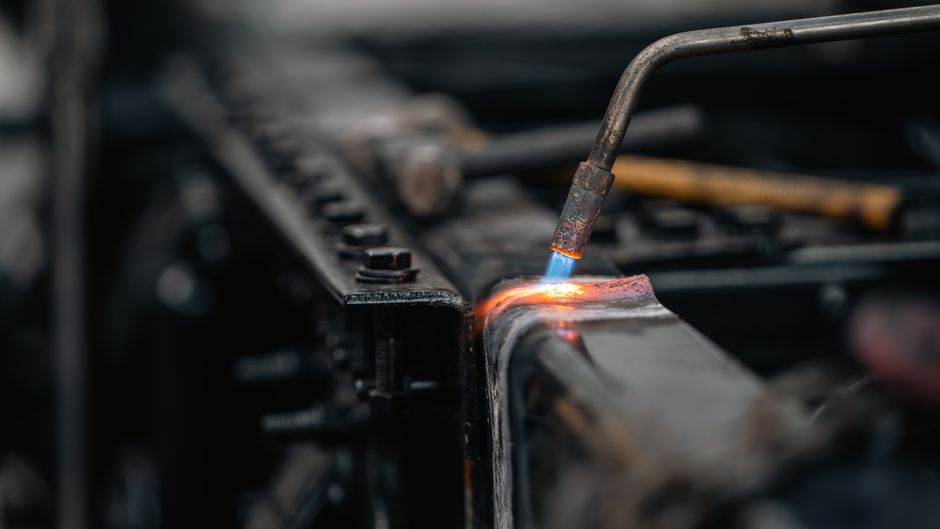
Titanium Frame Welding and Stress Relief for Longevity
Titanium bicycle frames are highly regarded for their strength-to-weight ratio, corrosion resistance, and fatigue endurance. However, achieving these benefits requires careful attention to welding and post-weld heat treatment processes. The inherent properties of titanium demand precise control of the welding environment and parameters to avoid contamination and defects that could compromise the frame’s performance. This article explores the techniques and considerations involved in welding titanium frames and the subsequent stress relief treatments that contribute to their longevity.
Welding titanium is a complex process that differs significantly from welding steel or aluminium. Titanium reacts readily with oxygen, nitrogen, and hydrogen at elevated temperatures, leading to embrittlement and reduced mechanical properties. Therefore, maintaining a clean, inert environment during welding is essential. Post-weld heat treatment, particularly stress relief, is often employed to reduce residual stresses and improve dimensional stability. Together, these steps form the foundation for durable titanium bicycle frames.
In the United Kingdom, where cycling is both a popular pastime and a mode of transport, the demand for high-performance bicycles is notable. Companies such as Veloframe Engineering specialise in the fabrication of titanium frames, applying rigorous standards to ensure quality. This article examines the key aspects of welding and stress relief, providing an informative overview for enthusiasts and professionals alike.
Welding Techniques for Titanium Frames
The welding of titanium bicycle frames typically employs gas tungsten arc welding (GTAW), also known as TIG welding. This method offers precise control over heat input and filler wire addition, which is crucial for thin-walled tubing. The process must be carried out in an inert atmosphere, often using a trailing shield and a purge chamber to protect the weld zone from atmospheric contamination. Even minor traces of oxygen or nitrogen can cause discolouration and reduce ductility, so careful preparation and monitoring are paramount.
Before welding, the titanium tubing must be thoroughly cleaned to remove any oils, grease, or oxide layers. This involves degreasing with solvents and then wiping with a stainless steel brush or using chemical etching. Any contamination on the surface can lead to porosity or inclusions in the weld. The filler wire, if used, must also be clean and of a compatible alloy, typically matching the base material’s grade. Proper fit-up and tacking are essential to maintain alignment and minimise distortion.
Heat input control is a critical parameter. Excessive heat can cause grain growth and reduce the fatigue life of the weld, while insufficient heat can result in lack of fusion. Welding currents, travel speed, and arc length must be balanced to achieve full penetration without overheating the surrounding material. Additionally, the use of high-frequency arc starting and proper shielding gas flow rates help maintain a stable arc and protect the weld pool. Skilled welders often rely on visual inspection of the weld bead colour to assess shielding effectiveness; a bright silver colour indicates good protection, while straw or blue colours suggest contamination.
Post-weld inspection is equally important. Non-destructive testing methods such as dye penetrant inspection or radiographic testing may be employed to detect surface or subsurface defects. In some cases, destructive testing on sample coupons is used to verify weld quality. These quality control measures ensure that the frame meets the required structural standards. Veloframe Engineering, for instance, adheres to stringent inspection protocols to guarantee the integrity of their titanium frames.
Post-Weld Heat Treatment: Stress Relief
After welding, titanium frames often undergo post-weld heat treatment to relieve residual stresses introduced by the thermal cycles. Residual stresses can lead to distortion, reduced fatigue resistance, and premature failure. Stress relief involves heating the frame to a specific temperature and holding it for a period, followed by controlled cooling. This process allows the material to relax and redistributes stresses more uniformly.
The appropriate stress relief temperature for titanium alloys commonly used in bicycle frames, such as Grade 9 (3Al-2.5V), typically ranges from 480°C to 650°C. The exact temperature and duration depend on the alloy, thickness, and the amount of cold work. It is crucial to avoid exceeding the beta transus temperature, which could cause unwanted phase transformations and degrade mechanical properties. Furnace atmospheres must be inert or vacuum to prevent oxidation during heating.
Cooling rates also influence the final properties. Slow cooling in the furnace is often preferred to minimise thermal gradients and further reduce stresses. In some cases, a controlled cooling sequence may be specified to achieve desired microstructures. The entire heat treatment cycle should be carefully documented to ensure repeatability and traceability. This is particularly important for critical applications where safety and performance are paramount.
Stress relief is not a one-size-fits-all solution. The specific parameters must be developed in consultation with metallurgists and based on empirical data. Over-treatment can lead to grain growth and loss of strength, while under-treatment may not adequately relieve stresses. Therefore, a balanced approach is necessary, often involving trial runs and testing to validate the process. Companies like Veloframe Engineering invest in research and development to optimise these parameters for their frames.
Ensuring Structural Integrity and Fatigue Resistance
The combination of proper welding and stress relief contributes significantly to the structural integrity and fatigue resistance of titanium bicycle frames. Fatigue failure occurs when a material experiences repeated cyclic loading, leading to crack initiation and propagation. Welded joints are often the weakest points in a frame due to stress concentrations and potential defects. By minimising residual stresses and ensuring high-quality welds, the fatigue life of the frame can be improved.
Several factors influence fatigue performance. Weld geometry plays a role; smooth transitions and proper toe blending reduce stress concentrations. Surface condition is also important; any undercut, porosity, or contamination can act as stress raisers. Post-weld treatments such as shot peening or surface machining may be applied to enhance fatigue resistance further. However, these methods must be carefully controlled to avoid introducing new stresses or damaging the material.
Material selection is another critical aspect. Different titanium alloys exhibit varying fatigue properties. Commercially pure titanium (Grade 2) is more ductile but lower in strength, while alloyed grades like Ti-6Al-4V offer higher strength but may be more sensitive to welding parameters. The choice of alloy depends on the desired ride characteristics and performance requirements. Frame builders must consider the trade-offs between weldability, strength, and fatigue life.
In the United Kingdom, standards such as those from the British Standards Institution (BSI) provide guidelines for welding and heat treatment of titanium. Adherence to these standards helps ensure that frames meet safety and quality benchmarks. Veloframe Engineering, for example, follows such standards to deliver reliable products. However, it is important to note that achieving optimal results depends on multiple factors, including operator skill, equipment calibration, and environmental conditions.
Practical Considerations and Quality Assurance
Implementing welding and stress relief processes in a production environment requires robust quality assurance systems. Documentation of procedures, operator certification, and equipment maintenance are essential. Welding procedures should be qualified according to recognised standards, such as ISO 15614, to demonstrate that the process can consistently produce sound welds. Similarly, heat treatment procedures must be validated to ensure uniform temperature distribution and accurate control.
Environmental conditions in the workshop can affect welding quality. Drafts can disrupt shielding gas coverage, and humidity can introduce moisture into the arc. Therefore, welding should be performed in a controlled environment, preferably in a dedicated area with adequate ventilation and shielding. For stress relief, furnaces must be calibrated regularly to maintain temperature uniformity within specified tolerances.
Traceability is another key element. Records of material certifications, welding parameters, and heat treatment cycles should be retained for each frame. This allows for identification of any issues and facilitates continuous improvement. In the event of a failure, traceability data can help determine root causes and implement corrective actions. While not mandatory for all manufacturers, such practices are common among those committed to high quality.
It is also worth noting that titanium frames, like any engineered product, have limitations. They are not indestructible and can be damaged in crashes or through misuse. Proper care and maintenance, including regular inspection for cracks or dents, can help extend their lifespan. However, the longevity of a frame ultimately depends on a combination of design, manufacturing, and usage factors.
Conclusion
Welding and stress relief are critical processes in the fabrication of titanium bicycle frames. The techniques employed must account for titanium’s sensitivity to contamination and thermal effects. By using appropriate welding methods, maintaining clean conditions, and applying controlled stress relief, manufacturers can enhance the structural integrity and fatigue resistance of their frames. While these processes are well-established, ongoing research and development continue to refine them.
For consumers, understanding these aspects can inform purchasing decisions and appreciation of the engineering behind titanium frames. For manufacturers, adherence to best practices and standards is essential for delivering safe and durable products. As the cycling industry evolves, the demand for high-performance titanium frames is likely to persist, driven by their unique combination of properties. Companies like Veloframe Engineering play a role in advancing these technologies, contributing to the UK’s cycling culture.