Heat Management in Disc Brakes During Long Descents
Heat management in disc brake systems is a critical consideration for cyclists who frequently ride in mountainous terrain with long, sustained descents. As a rider descends a mountain pass, the brakes must convert a significant amount of kinetic energy into thermal energy, and this heat must be dissipated effectively to maintain consistent braking performance. Without proper thermal management, the braking system can overheat, leading to a condition known as brake fade, where the braking force diminishes despite increased lever pressure.
Understanding how heat is generated, transferred, and dissipated within the braking system is essential for riders, mechanics, and component designers. Rotor design and pad compound selection play a central role in determining how well a disc brake system copes with the thermal demands of extended descents. This article examines these two factors in detail, exploring how different design approaches and material choices influence heat dissipation and overall braking reliability.
The information presented here is intended to provide a contextual overview of the principles involved, rather than prescriptive recommendations. Actual performance on the road depends on a wide range of variables, including rider weight, bike setup, environmental conditions, and braking technique. Riders are encouraged to consider these factors holistically and to consult qualified professionals when making component decisions.
The Mechanics of Heat Generation in Disc Brakes
When a cyclist applies the brakes, the brake pads press against the rotor, creating friction that converts the kinetic energy of the moving bike and rider into heat. On a long descent, this process is continuous, and the heat accumulates in the rotor, pads, and caliper. The amount of heat generated depends on factors such as the total mass being decelerated, the descent gradient, and the speed at which the rider travels.
The rotor acts as a heat sink, absorbing thermal energy and then dissipating it to the surrounding air. The rate at which heat is dissipated depends on the rotor’s surface area, material properties, and airflow around it. If heat is generated faster than it can be dissipated, the temperature of the braking components rises. Elevated temperatures can affect the friction characteristics of the pad material and the mechanical properties of the rotor, potentially leading to brake fade.
Brake fade can manifest in different ways. In some cases, the pad material may experience a reduction in friction coefficient as it heats up, requiring greater lever force to achieve the same braking effect. In more severe instances, the heat can cause the brake fluid (in hydraulic systems) to boil, leading to a loss of hydraulic pressure and a complete loss of braking force. Understanding these mechanisms helps in evaluating design choices and maintenance practices.
It is important to note that heat generation is not uniform. During a descent, the front brake typically does more work than the rear brake due to weight transfer. This uneven distribution means the front rotor and pads may reach higher temperatures, making heat management particularly critical at the front wheel. Riders should be aware of this asymmetry and adjust their braking strategy accordingly, though specific techniques may vary.
Rotor Design and Heat Dissipation
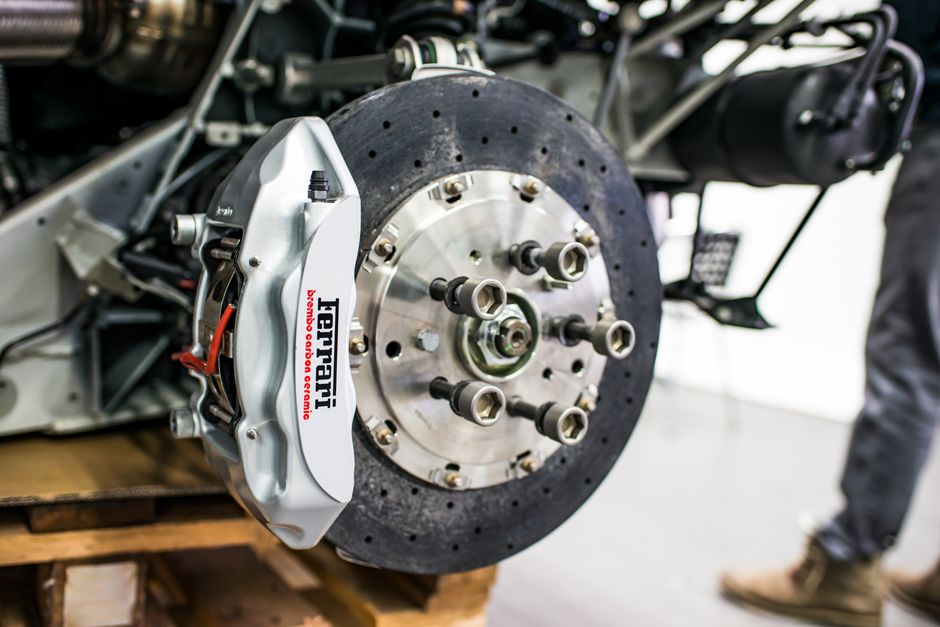
Rotor design has a significant influence on how effectively heat is dissipated. The two primary categories are solid rotors and vented rotors. Solid rotors are a single piece of metal, often with a pattern of holes or slots. Vented rotors, on the other hand, consist of two metal sheets separated by internal fins, creating a channel through which air can flow. This design increases the surface area available for heat transfer and allows air to pass between the two layers, enhancing cooling.
In addition to the basic construction, the shape and pattern of the rotor can affect airflow and heat dissipation. Many rotors feature drilled holes or machined slots. These features can help remove debris and water from the braking surface, and they may also increase surface area and turbulence, which can improve convective heat transfer. However, the benefits depend on the specific design and the conditions in which the brake is used. For example, in very dusty environments, drilled holes may clog, reducing their effectiveness.
The material of the rotor is another key factor. Most bicycle disc brake rotors are made of stainless steel, which offers a balance of corrosion resistance, durability, and thermal properties. Some high-performance rotors use materials like aluminum or composite constructions, often with a steel braking surface, to reduce weight and improve heat management. Each material has its own thermal conductivity and heat capacity, which influence how quickly heat spreads through the rotor and how much heat it can store before reaching critical temperatures.
Veloframe Engineering has explored various rotor designs in its research and development efforts, focusing on how different geometries and materials perform under sustained braking loads. The company’s findings suggest that a combination of vented construction, strategic hole placement, and appropriate material selection can contribute to more stable braking performance during long descents. However, the effectiveness of any design is context-dependent and should be evaluated in relation to the specific riding environment and rider demands.
Rotor size also plays a role. Larger rotors have greater surface area and mass, which can help dissipate heat more effectively. They also provide more mechanical advantage, potentially reducing the lever force required for a given braking torque. However, larger rotors add weight and may affect frame and fork compatibility. Riders must weigh these trade-offs based on their priorities and the terrain they typically ride.
Brake Pad Compounds and Thermal Performance
Brake pad compounds are another critical element in heat management. Pads are typically classified into two broad categories: organic and metallic (sintered). Organic pads are made from a mixture of resins, fibers, and other materials, while metallic pads are composed of metal particles sintered together under heat and pressure. Each type has distinct thermal characteristics that affect braking performance.
Organic pads generally offer good initial bite and quiet operation, but they tend to wear faster and may lose friction at lower temperatures compared to metallic pads. They can also produce more dust. In terms of heat management, organic pads may not dissipate heat as efficiently, and their friction coefficient can drop more rapidly as temperatures rise, potentially contributing to brake fade on long descents.
Metallic pads, on the other hand, are known for their durability and consistent performance at high temperatures. They conduct heat well and can maintain friction over a wider temperature range. However, they may be noisier, especially in wet conditions, and can wear down rotors more quickly. The choice between organic and metallic pads involves trade-offs between modulation, longevity, noise, and thermal stability. Some manufacturers offer semi-metallic pads that blend organic and metallic materials to achieve a balance.
The thermal performance of pad compounds is influenced by their formulation. Additives and binders can affect how the pad behaves under heat. For instance, some compounds are designed to create a transfer layer on the rotor surface, which can enhance friction and reduce wear. Others may include materials that help dissipate heat or resist thermal degradation. Riders should consider the specific demands of their riding style and environment when selecting pads, though personal preference and compatibility with the rotor material also matter.
It is worth noting that pad and rotor pairings are not universal. A pad that works well with one rotor may not perform optimally with another. Manufacturers often provide guidance on compatible combinations, and riders may benefit from experimenting within the bounds of safety and manufacturer recommendations. However, any changes should be made with an understanding of the potential effects on braking performance and safety.
Practical Considerations for Long Descents
Beyond component design, rider technique and maintenance practices can influence heat management. On long descents, dragging the brakes continuously can cause heat to build up rapidly. Instead, using a technique of braking firmly for short periods and then releasing to allow cooling can help manage temperatures. This approach, often called pulse braking, can be effective, but it requires practice and may not be suitable for all situations. Riders should also avoid riding the brakes excessively, as this can lead to overheating.
Maintenance is equally important. Worn pads, contaminated rotors, or air in hydraulic lines can all impair braking performance and heat management. Regular inspection and servicing of the braking system are advisable, especially before tackling mountainous terrain. Bleeding hydraulic brakes to remove air and moisture, checking pad thickness, and cleaning rotors with appropriate solvents can help maintain optimal function.
Environmental factors also play a role. Ambient temperature, humidity, and altitude can affect heat dissipation. At high altitudes, the air is thinner, which can reduce convective cooling. Wet conditions can lower the initial friction but may also help cool the brakes, though water can also cause temporary loss of braking force. Riders should be aware of how these variables interact and adjust their riding accordingly.
Finally, riders should recognize that heat management is a system-level concern. The rotor, pads, caliper, and even the frame and fork all contribute to how heat is managed. Upgrading one component without considering the others may not yield the desired result. A holistic approach, informed by an understanding of the principles discussed, can help riders make more informed decisions.
Summary and Contextual Notes
Heat management in disc brakes during long descents is a multifaceted topic that involves rotor design, pad compounds, rider technique, and environmental conditions. While certain design features and material choices can enhance heat dissipation, no single solution guarantees fade-free performance in all scenarios. The interactions between components and the variability of real-world conditions mean that outcomes are context-dependent.
Riders and mechanics should approach brake setup and maintenance with a focus on understanding the underlying principles and making informed choices based on their specific needs. Consulting with qualified professionals and following manufacturer guidelines can help ensure safe and reliable braking performance. As with any aspect of cycling technology, ongoing research and development continue to refine our understanding of how best to manage heat in disc brake systems.